
Exposure therapy is one of my client’s least favourite types of therapy when first introduced, but most beneficial, and once they get started, most clients say it was much easier than they thought. It’s usually the anticipation that is worse than reality; and if interested, you can read about anticipatory anxiety.
For the full pathway from symptoms to treatment, see the guide to panic attacks and treatment.
Exposure therapy has been around for a long time. It was a theory developed by Ivan Pavlov in the early 20th century and has evolved over the years into its present form within Cognitive Behavioural Therapy (CBT).
If you have attended therapy with me or taken one of my courses, you will have come across it already as part of the homework I set. You would have undertaken behavioural experiments where you are slowly and systemically exposed to things that cause you anxiety or that you are avoiding altogether.
One way to understand exposure therapy is through habituation. This is the process where the fear response decreases when the fear source is encountered repeatedly. For example, the first time you sat behind the wheel of a car, you were probably terrified, but the more you exposed yourself to driving, as opposed to avoiding it, the more you habituated to it, and now you get in the car and drive.
Fear often becomes less intense with practice, but it does not have to disappear for you to learn. You can also learn that a feared outcome does not happen, or that you can manage a situation while feeling anxious.
Here are some key aspects of exposure therapy:
- It’s a structured treatment process.
- It involves gradual and repeated exposure to the source of fear.
- It’s conducted in a safe and controlled environment.
- It’s guided by a trained therapist.
- It helps you overcome panic attacks.
Types of Exposure Therapy
Exposure therapy can involve real-life situations, imagined situations and feared body sensations.
In vivo exposure involves facing the actual source of fear. For example, if someone fears dogs, they might gradually spend time around them.
Imaginal exposure involves imagining the fear source. This is often used when the fear source is not easily accessible or is a past traumatic event. I personally get clients, regardless of the type of fear, to use imaginal exposure until they habituate before facing the fear in real life.
Interoceptive exposure focuses on body sensations that have become frightening, such as a racing heart. The exercise is chosen to suit the person’s health and the fear being tested. My guide to body sensation practice explains how this differs from avoiding or repeatedly checking sensations.
Exposure Therapy for Treating Panic Attacks
The goal of exposure therapy for panic attacks is to reduce the fear response. This is achieved by repeatedly exposing the individual to the source of fear. For example, if you get panic attacks in large shopping centres, the goal is for you to go into the shopping centre in a very controlled and managed way, to spend a short time there, see whether what you feared actually happens, and then gradually try a longer visit. One of mine was, bedtime and lying down, triggered night panic.
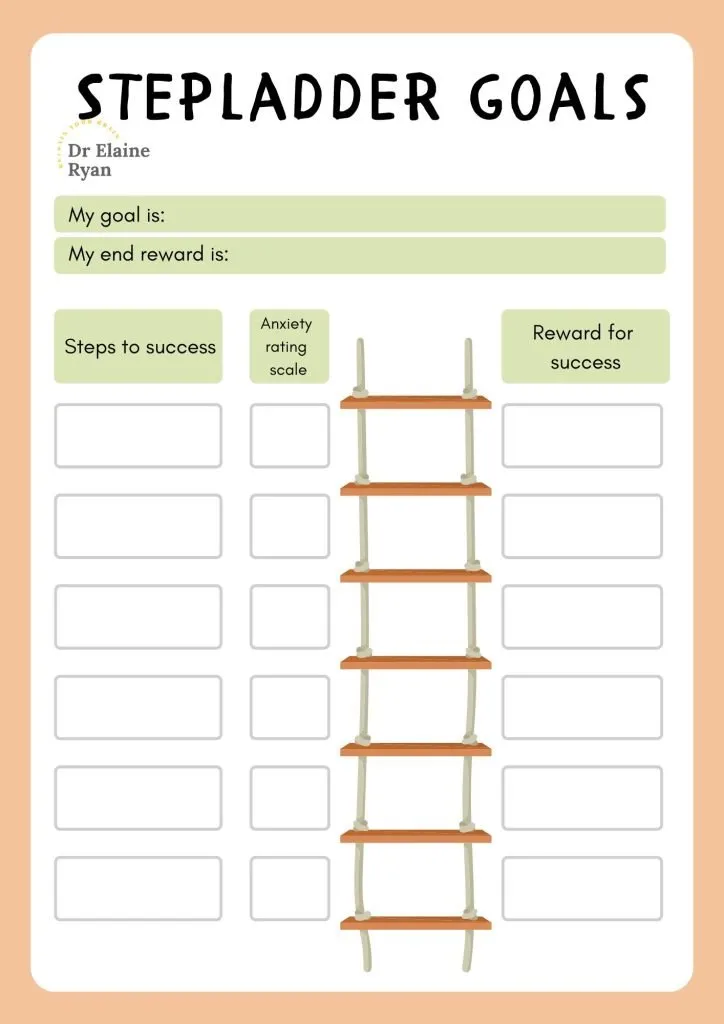
You start to do this in exposure therapy by creating a fear hierarchy.
Creating a Fear Hierarchy
This is a list of fear sources, ranked from least to most frightening. If going into the shopping centre is terrifying for you, it would be at the top of the fear hierarchy and not something we would even consider doing until you see that you can successfully manage other situations first. We build success into this equation, as early success is a great motivator.
The least frightening thing is the first thing you start with on your fear hierarchy. That might be going to a small familiar corner shop, or it could be walking to the corner shop but not entering, either walking back or walking past.
To start your exposure therapy, you rank on a scale of, let’s say, 1 – 10 how anxiety-provoking this is for you, and you might mark it at a 7.
Choose something you have been avoiding and start with a short visit or a small task. For example, you might worry, “If I feel dizzy in the shop, I will have to leave immediately.” Afterwards, look at what actually happened. Repeat the visit and build up gradually. You do not have to make all the anxiety disappear before you can learn from the experience.
When you are ready, try a little more—for example, stay for longer or visit another shop. You can build up gradually; you do not have to wait until every trace of anxiety has gone.
How to create your own fear hierarchy
You can use my image below as a basis for your fear hierarchy.
The Role of the Therapist
The therapist plays a crucial role in exposure therapy. They guide the individual through the exposure process.
The therapist ensures the exposure is conducted in a safe and controlled environment and provides support and encouragement throughout the process.
The therapist also helps the individual develop coping strategies. These strategies help manage anxiety during exposure and in real-life situations.
The Effectiveness of Exposure Therapy for Panic
Exposure therapy has proven to be highly effective for treating panic attacks. It’s backed by extensive research and clinical practice.
Conclusion
Exposure therapy can help you get your life back and stop avoiding aspects of it. Although it sounds cliched, it gives you a sense of control and achievement when you are no longer afraid to do things that you once considered normal.
Next steps: CBT for Panic Attacks · How to Stop Panic Attacks · Exposure therapy for panic